
The $1.77 Trillion Inventory
Crisis Plaguing Retail —
and How AI Finally Solves It
Retailers worldwide carry too much stock and still run empty shelves. This is not a supply chain accident — it's a data problem. Here's the evidence, the root causes, and how DeepRoot's platform turns retail operations from reactive to intelligent.
There is a paradox at the heart of modern retail that no amount of additional purchasing resolves: the same business that holds months of excess inventory simultaneously experiences chronic out-of-stock situations. According to IHL Group, the combined cost of overstock and stockouts — what the industry calls inventory distortion — reached $1.77 trillion globally in 2023, equivalent to 7.2% of all retail sales. This is not a fringe problem. It is the default state of most retail operations today, and it stems from structural failures in how retail businesses manage, interpret, and act on their operational data.
Why Retail's Biggest Crisis Is a Data Problem, Not a Buying Problem
The conventional response to stockouts is to buy more. The conventional response to overstock is to discount and clear. Neither addresses the underlying failure, which is this: most retail businesses do not know, in real time, which specific products are in which specific stores in what quantities — and their data systems are not built to tell them.
Harvard Business Review research has found that when a product is unavailable, retailers lose nearly half of all intended purchases — consumers move instantly to an alternative or abandon the purchase entirely. Mirakl's research further notes that over 20% of online cart abandonments trace directly to stockouts. These are not edge cases; they are the daily operating reality for most retail chains.
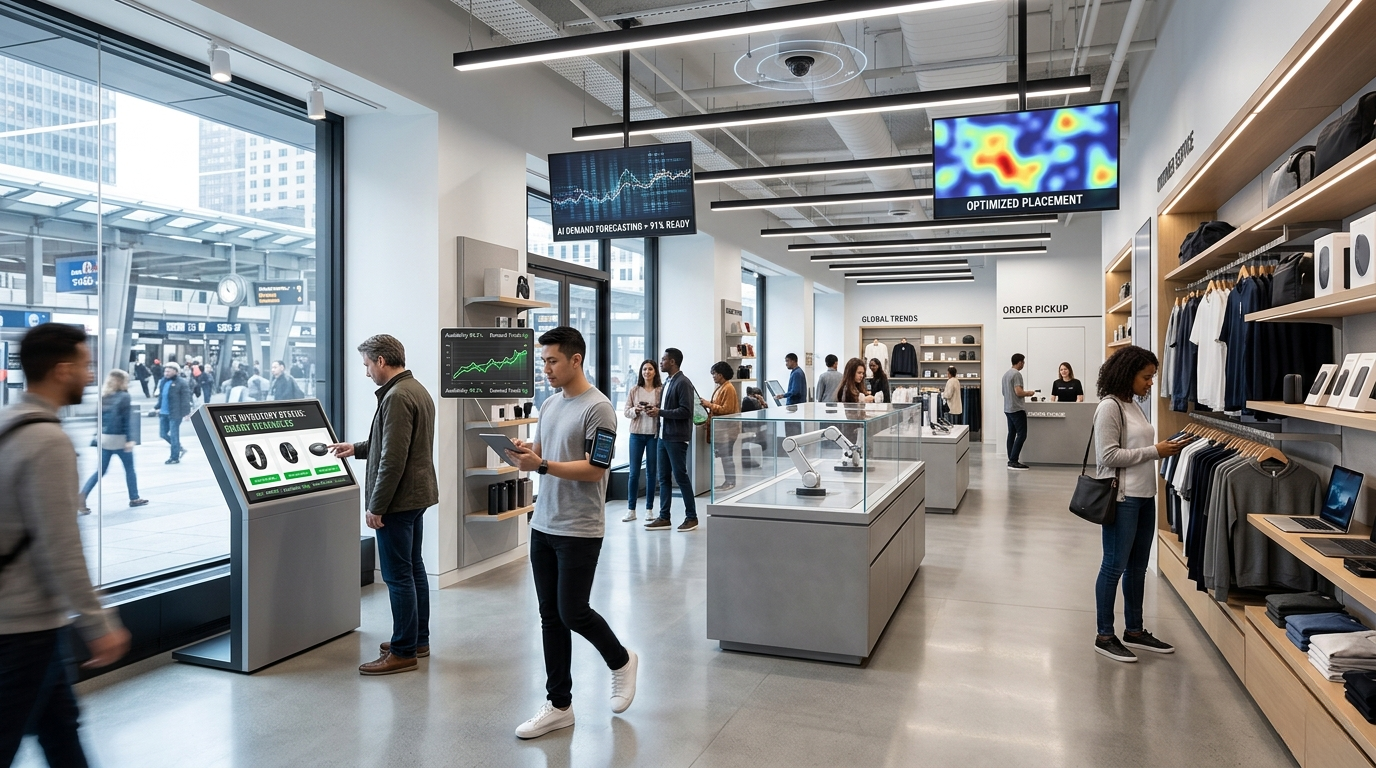
"Getting inventory right represents one of the largest single profit improvement opportunities in retail, with proper balance between availability and efficiency driving sustainable competitive advantage across all categories."— Opensend Industry Analysis, citing IHL Group Inventory Distortion Report, 2023
At the same time, Netstock's 2024 Inventory Benchmark Report reveals that excess inventory grew to represent 38% of SMBs' total inventory, with over half of those businesses using credit financing to hold that excess — creating a compounding cash flow burden that limits their ability to invest in higher-performing lines.
The five structural root causes
Based on industry research and direct experience working with retail operations, the inventory crisis consistently traces to five compounding failures:
What the Research Confirms: Scale, Cost, and the AI Opportunity
The scale of retail's inventory problem is well-documented. Industry analysis citing IHL and Purdue research shows that out-of-stock situations alone cost retailers 4.1% of total sales — a devastating figure when the industry average net profit margin sits at just 1.6%. A single percentage point improvement in inventory management can therefore increase retail profitability by over 60%.
The consequences extend far beyond the immediate lost sale. WAIR.ai's analysis of consumer behaviour shows that 60% of shoppers choose to purchase from a competitor when faced with a stockout. Repeated stockouts can reduce customer lifetime value by 15–20% after just one negative experience — damage that marketing budgets cannot easily repair.
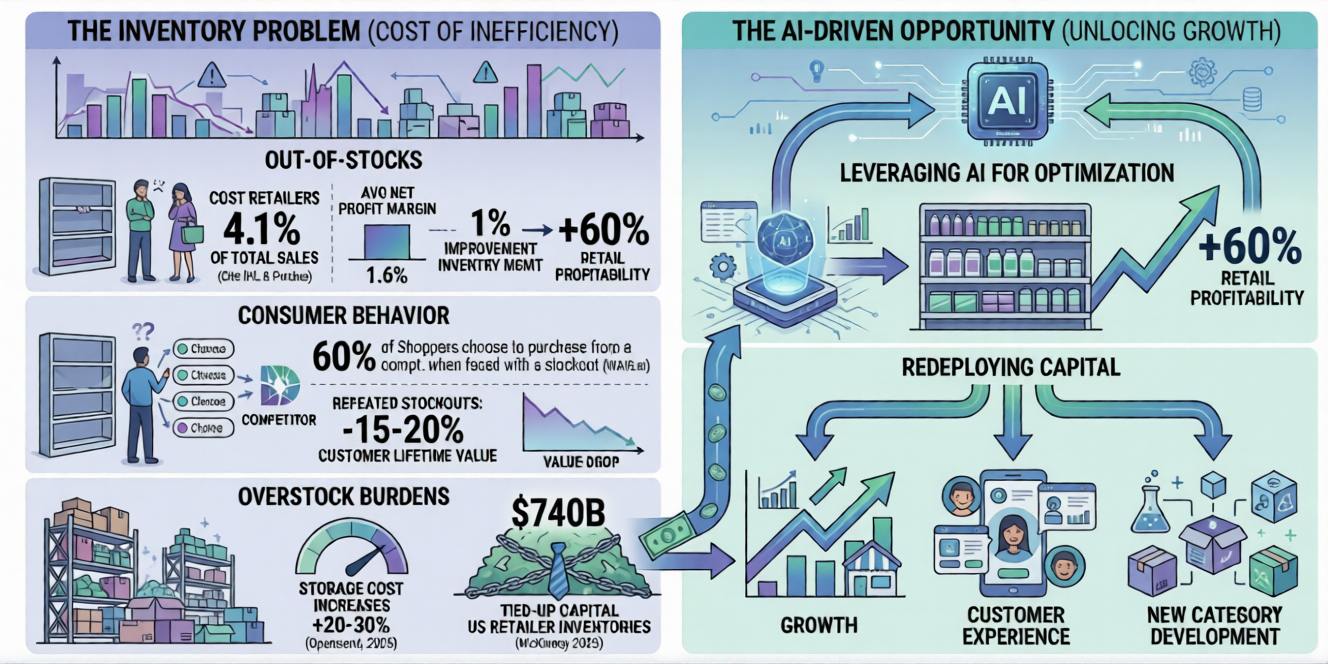
On the overstock side, Opensend's 2025 inventory analysis finds that businesses carrying excess inventory face storage cost increases of 20–30%, alongside the cascading capital constraints of financing unsold goods. McKinsey's 2023 research noted that US retailer inventories had ballooned to $740 billion — capital that could be redeployed into growth, customer experience, or new category development.
Gartner projects that 70% of large organisations will adopt AI-based supply chain forecasting by 2030. The September 2025 Gartner press release notes that AI-based forecasting delivers improved strategic decision making, faster responses to market changes, and enhanced collaboration workflows. Retailers who delay adoption risk competing against peers with structurally lower inventory costs and higher availability rates.
The AI impact: what the numbers show
The business case for AI-driven inventory intelligence is not theoretical. McKinsey's foundational research on AI-driven operations forecasting consistently shows:
Retail Gazette's March 2026 analysis of AI's actual supply chain impact confirms that Deloitte reports 30% of retailers already use AI for supply chain visibility, with 59% of executives expecting positive ROI from AI-driven supply chain initiatives within 12 months. The window to build competitive advantage is narrowing.
How DeepRoot Solves Each Root Cause, With Precision
Most AI platforms make broad promises about "operational efficiency." DeepRoot takes a fundamentally different approach: before any AI is deployed, the platform quantifies exactly what your data can and cannot support — and maps the highest-ROI use cases your data is actually ready for today. This is how it directly addresses each of retail's structural failures.
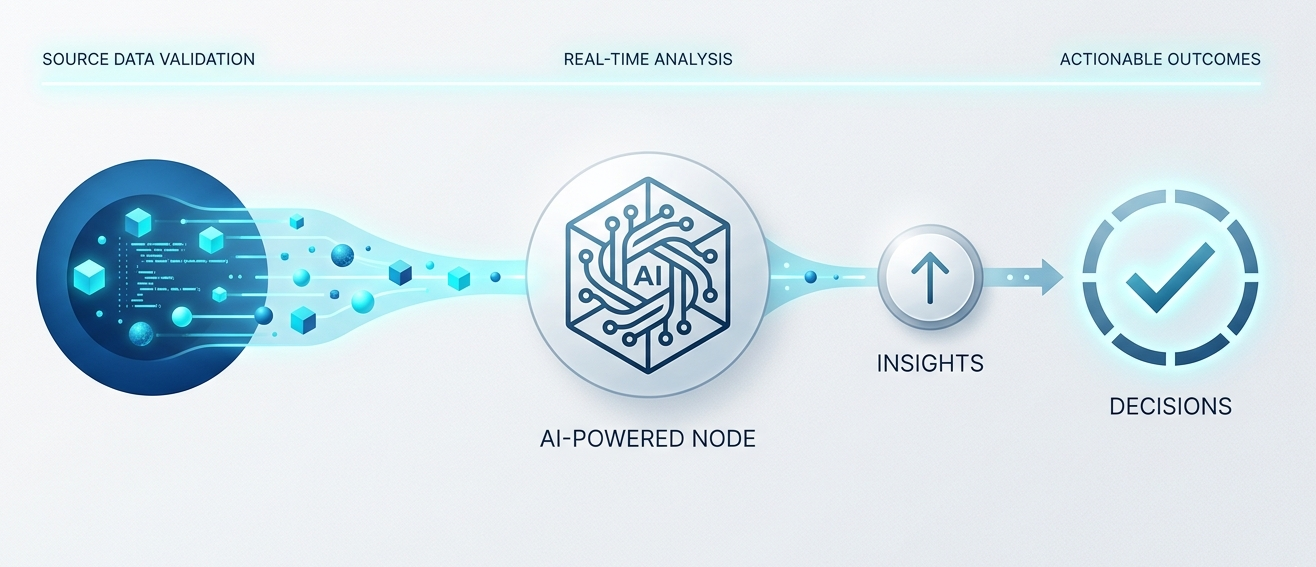
Data-First. Always.
DeepRoot's sequence — validate data first, identify use cases second, deploy AI third — is not caution for its own sake. When agentic AI makes a wrong decision, that decision is acted upon at scale. A bad replenishment trigger can generate purchase orders worth hundreds of thousands of pounds on corrupted data. The DRI prevents this from happening.
- Quality: completeness, duplication, timeliness of inventory records
- Structural Integrity: schema alignment across ERP, POS, WMS systems
- Governance: PII controls, data lineage, security classification
- AI Fitness: explainability, model alignment, robustness for forecasting
- DRI < 35: Do Not Deploy. DRI > 70: AI-Ready for autonomous agents
- 14-day assessment, no data movement required
- Scans ERP, POS, WMS, and supplier systems for high-ROI patterns
- Scores each use case: feasibility × impact × data readiness
- Identifies redundancies and bottlenecks across the data landscape
- Prevents budget waste on pilots doomed to fail on poor data
- Continuously realigns use cases with evolving business goals
- Real-time SKU-store demand sensing and availability monitoring
- Automated OTB recalculation as rolling forecasts are updated
- Buying guardrail agents: flags negative OTB before orders are placed
- Smart replenishment trigger agents with open allocation visibility
- 98%+ task automation accuracy across active production deployments
- Translates conversational queries into ERP + WMS + POS insights
- Surfaces availability gaps, demand anomalies, and buying risks
- Understands org structure: buyer vs. merchandiser vs. director
- Coordinates with Agentic AI to initiate replenishment workflows
- No SQL, no BI dashboards, no technical intermediary required
What This Looks Like in Practice: Insights From a Retail Engagement
Working with a major international retailer operating across high-footfall transit locations, the DeepRoot team encountered inventory inefficiency at significant scale. The business was carrying five to seven months of stock — well beyond the industry benchmark of two months — while simultaneously reporting persistent out-of-stock situations in flagship store locations.
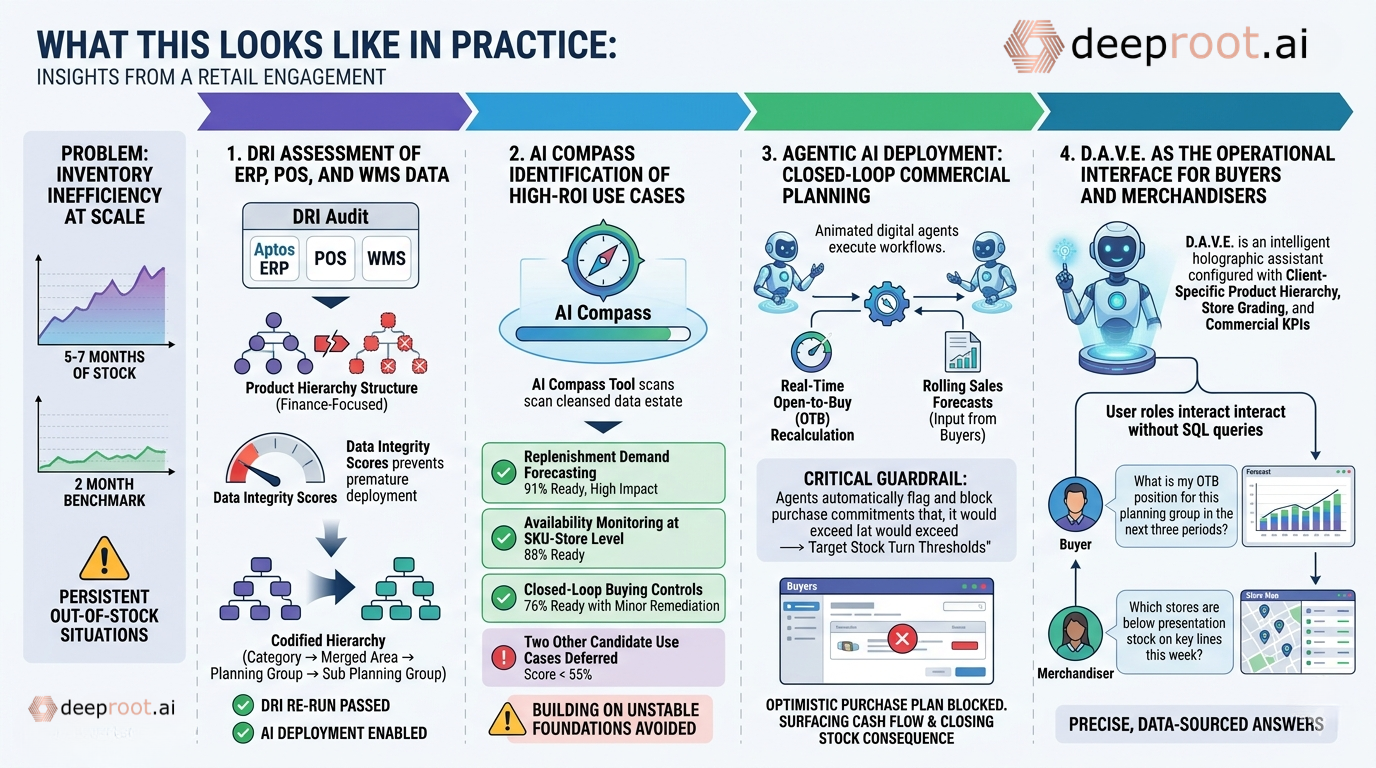
The engagement followed DeepRoot's structured deployment sequence, which begins with data validation before any AI is activated:
Within the first full planning cycle, the commercial team reduced its year-end stock position by over $20 million — moving from five-to-seven months of stock toward a two-month target. Stock turn improved from approximately 2.0× to a trajectory of 2.9× annually, meaning the business could generate equivalent revenue with roughly one-third less working capital. Shelf availability scores simultaneously improved because freed capital was reallocated to replenish high-velocity SKUs in priority locations — resolving the overstock-and-stockout paradox at its root.
Why the Sequence Matters: Data Readiness Before AI Deployment
The DeepRoot architecture sequence — DRI first, AI Compass second, Agentic AI third — is not bureaucratic caution. It reflects a fundamental truth about agentic AI that most retail technology vendors obscure: when agentic AI makes a wrong decision, that decision is acted upon at scale.

Agentic AI Requires a Higher Standard of Data
A generative AI system producing a bad output creates a bad draft — a human reads it and doesn't act on it. An agentic AI executing a bad replenishment decision can trigger purchase orders worth hundreds of thousands of pounds based on corrupted demand signals. The stakes demand validation before deployment.
Most clients discover that 30–40% of their existing data already scores above 0.75 (AI-Ready) on the DRI, allowing a first production use case to launch in 2–4 weeks while remediation continues in parallel. You do not need perfect data to start. You need to know exactly which data is ready, and to deploy only where it is. That is what the DRI provides.
DeepRoot's own research notes that Gartner warns over 40% of agentic AI projects will be cancelled by end of 2027 due to inadequate risk controls — precisely because data and governance foundations were never validated upfront. For retail specifically, industry research confirms that only 35% of businesses feel confident in their inventory forecast accuracy — a baseline so low that even a partial AI deployment on validated data produces measurable competitive advantage.
Retail Gazette's 2026 analysis concludes that the most credible AI impact sits where systems can sense, decide, and coordinate across functions — rather than merely reporting what already went wrong. That is precisely the operational position DeepRoot's agentic layer occupies.
Frequently Asked Questions
Research & Sources
- 1. IHL Group — "Fixing Inventory Distortion 2023/2024" · via LocalExpress Analysis
- 2. McKinsey — "AI-Driven Operations Forecasting in Data-Light Environments," Feb 2022 · mckinsey.com
- 3. McKinsey — "Harnessing the Power of AI in Distribution Operations," Nov 2024 · mckinsey.com
- 4. Gartner — "70% of Large Organisations Will Adopt AI-Based Supply Chain Forecasting by 2030," Sep 2025 · gartner.com
- 5. NRF — "How Retailers Can Master Inventory Challenges to Achieve Operational Efficiency in 2025" · nrf.com
- 6. Retail Gazette — "Realistically, Where Is AI Actually Transforming the Retail Supply Chain?" Mar 2026 · retailgazette.co.uk
- 7. Netstock — "2024 Inventory Management Benchmark Report" · netstock.com
- 8. Innoflexion / DeepRoot — "Generative AI vs Agentic AI: What Enterprises Must Know in 2026" · innoflexion.com
- 9. Innoflexion / DeepRoot — "Escaping Pilot Purgatory: The AI Data Readiness Index (DRI)" · innoflexion.com
- 10. Throughput World — "How AI Demand Forecasting Software Improves Supply Chain Forecast Accuracy," Oct 2025 · throughput.world
Is Your Retail Data Ready for AI?
Most retail AI projects stall because they deploy on data that was never validated for AI use. DeepRoot AI tells you exactly what your data can support and which agentic ai solution can generate real ROI, before a single pound of budget is committed to development.